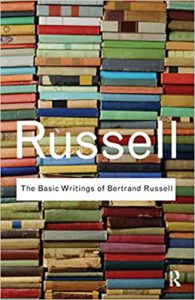
Bertrand Russell: Unyielding Grimace Against a Pointless Universe
Such, in outline, but even more purposeless, more void of meaning, is the world which Science presents for our belief. Amid such a world, if anywhere, our ideals henceforward must find a home. That Man is the product of causes which had no provision of the end they were achieving; that his origin, his growth, his hopes and fears, his loves and his beliefs, are but the outcome of accidental collocations of atoms; that no fire, no heroism, no intensity of thought and feeling, can preserve an individual life beyond the grave; that all the labours of the ages, all the devotion, all the inspiration, all the noonday brightness of human genius, are destined to extinction in the vast death of the solar system, and that the whole temple of Man’s achievement must inevitably be buried beneath the debris of a universe in ruins—all these things, if not quite beyond dispute, are yet so nearly certain that no philosophy which rejects them can hope to stand. Only within the scaffolding of these truths, only on the firm foundation of unyielding despair, can the soul’s habitation henceforth be safely built (p. 39). Continue reading “Bertrand Russell’s Pointless Universe versus John Calvin’s Purposeful Providence”
 THIRTEENTH QUESTION: MIDDLE KNOWLEDGE
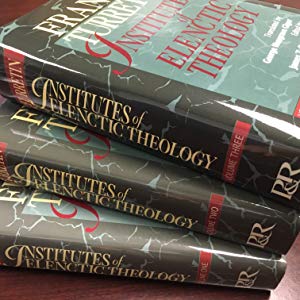
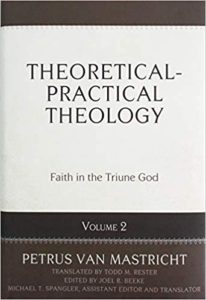 It has been suggested by some bloggers that exegesis is on the side of the Calvinists while logic is on the side of the Arminians. This suggestion sounds plausible since the majority of Christian philosophers today are either Arminians or Open theists. The bloggers are correct in acknowledging that Calvinists offer robust exegesis to support their arguments which is evident in the works of Thomas Schreiner, John Piper, Sam Storms and James White. However, the suggestion is mystifying since historically Calvinists have been accused of imposing of a rigid logical system onto Scripture. We can only conclude that the bloggers who suggest that Calvinists lack rigor in logical analysis have never bothered to read Calvin and his successors like Francis Turretin, John Owen, Jonathan Edwards or Dutch Reformed theologians like Wilhelmus Brakel and Petrus van Mastricht. A quick glance of Richard Muller’s 4-vol (2176 pages) work on Post-Reformation Reformed Dogmatics should immediately impress the reader of both the acuity and logical brilliance displayed by the Calvinists. It was precisely because the doctrinal disputations of the Reformed Scholastics were dominated by austere logic, where conciseness and clarity trumps readability that Calvinism has been accused on putting logic above Scripture.