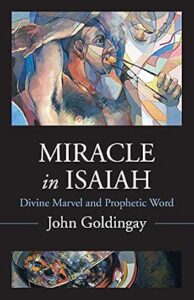
Prophet’s Prediction or Pundit’s Projection? A Response to John Goldingay
Dr. Leong Tien Fock (PhD in Semitic Languages and Literatures)*
God uses the prophecy of Isaiah—particularly the long-term prediction concerning Cyrus and his role in the return of the Jewish exiles to restore Jerusalem—to demonstrate that he alone is God and that he has spoken through his prophets. Critical scholarship has long claimed that this “prophecy” is a pundit’s projection rather than a prophet’s prediction. We would ignore this claim if it were confined to critical scholarship. However, recently John Goldingay (2022), who is considered an evangelical scholar, has written a book on “miracle” in Isaiah that promotes the critical view of prophecy in an attempt to show that such a view is consistent with a faithful reading of Scripture. And the book has been endorsed by evangelical scholars. Thus, a critical response is warranted and necessary. Continue reading “Prophet’s Prediction or Pundit’s Projection? A Response to John Goldingay”

 Bart Ehrman’s Challenge to Evangelicals to Renew Studies on NT Introduction