Historical Origin of Divine Christology. Part 1 – Apostolic Christology vs Mythological Christology

Mythological Christology
Some critics of Christianity assert that the doctrine of the deity of Christ was imposed on the church by Emperor Constantine during the Council of Nicaea (325 AD). Presumably, the early church in the first century began with a lower view of Jesus as an itinerant teacher and apocalyptic prophet of God. However, Jesus was gradually elevated to a higher status as Christianity spread through the Roman Empire. Christianity was loosened from its monotheistic Jewish roots when the new Hellenistic Christian communities surpassed the early Judaistic Christian community. A higher Christology evolved with adoption of elements of pagan religions. The result is the deification of Jesus Christ.

This theory has its roots in the “history of religions school” (Religionsgeschichtliche Schule) in Germany in the 19th century. The school extended its influence into the USA through the seminal works of Wilhelm Bousset, Kyrios Christos (1913) and Walter Bauer, Orthodoxy and Heresy in Earliest Christianity (1934). High profile scholars like Bart Ehrman are essentially theorizing from the framework of Bauer’s theory even as they speculate further that the deification of Jesus Christ was accelerated, purportedly under the influence of Jewish angelology. Continue reading “Historical Origin of Divine Christology. Part 1 – Apostolic Christology vs Mythological Christology”

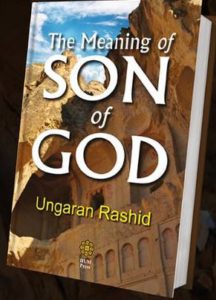
The Meaning of “Son of God”: A Muslim Critique – Christology Part 1

Author: Ungaran Rashid
Publisher: IIUM Press, 2021.
ISBN 9789674910945
No. of pages: 128
Price: RM 45.00

[This book is a revised version a thesis in fulfilment of the requirement for the degree of Master of Islamic Revealed Knowledge and Heritage (Uṣūl al-Dīn and Comparative Religion) at International Islamic University Malaysia, Kuala Lumpur].

Muslim scholars’ critique of the Christian teaching of the deity of Christ would be more credible if it engages with the origin of divine Christology in its historical context rather than relies on dogmatic assertions of Islamic doctrine. As such, this book is a commendable attempt by a Muslim scholar to engage with Christian scholarship based on historical criticism of primary sources and critical analysis of concepts of Christology.

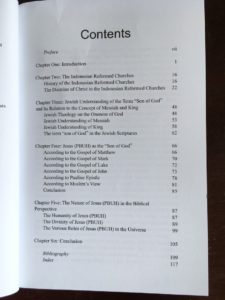
For Christians, “Son of God” describes the filial relationship between Jesus Christ and God the Father. However, Muslims reject the Christian understanding and assert that “He (Allah) begot no one nor was He begotten” (Sura 112 – Abdel Haleem translation). Dr. Ungaran Rashid, assistant professor at International Islamic University, Malaysia, argues that the way to resolve this conflict of interpretation is to examine the term “Son of God” from the main source, which is Jewish Scriptures (Ungaran’s term for the Old Testament). Continue reading “The Meaning of “Son of God”: A Muslim Critique – Christology Part 1″

Yesus Kristus Adalah Firman Allah (Yohanes 1:1, 14)

Keadaan dunia ini selalu berubah. Pada hal yang sebenarnya, yang tiada berubah barang sedikit, iaitu Firman Allah yang Maha Mulia itu. Dari zaman ke zaman Allah ta’ala telah menyatakan sifat-sifat-Nya dan kehendak-Nya kepada manusia dengan perantaraan nabi-nabi-Nya itu. Tambahan pula, Firman Allah itu bukannya satu khabar yang sayup atau tak tentu bunyinya, melainkan Firman Allah sudah tersurat dengan tepat and nyata di dalam Al-Kitab yang suci. Di dalam sebahagian Al-Kitab yang digelarkan Kitab Injil itu, ada kenyataan yang lebih ajaib lagi, iaitu Firman Allah telah mengambil bentuk kemanusiaan dan masuk ke dalam dunia dalam peribadi Yesus Kristus yang tersebut namanya Firman Allah. Penjelmaan Firman Allah itu ialah suatu hakikat yang menghairankan. Perkara ini suatu rahsia yang diuraikan di dalam beberapa ayat Kitab Injil. Demikianlah maksudnya:

Dia datang kepada milik-Nya sendiri, tetapi milik-Nya tidak menerima-Nya…Firman itu menjadi manusia dan hidup dalam kalangan kita. Kita telah melihat kemuliaan-Nya sebagai Anak Tunggal yang datang daripada Bapa, penuh dengan kasih kurnia dan kebenaran (Yohanes 1:11, 14). Continue reading “Yesus Kristus Adalah Firman Allah (Yohanes 1:1, 14)”

Christ’s Death as Expiation-Propitiation (Hilasterion): Appeasing the Wrath of God

  If the heart of the cross is the atonement, the heart of the atonement is penal substitution. Christ’s Death as Penal Substitutionary The prima facie evidence from Scripture supports the case for Christ’s death as penal substitutionary. This is clear from the following verses. Christ died for the ungodly (Rom. 5:6) Christ died for … Continue reading “Christ’s Death as Expiation-Propitiation (Hilasterion): Appeasing the Wrath of God”


If the heart of the cross is the atonement, the heart of the atonement is penal substitution.

Christ’s Death as Penal Substitutionary
The prima facie evidence from Scripture supports the case for Christ’s death as penal substitutionary. This is clear from the following verses.

Christ died for the ungodly (Rom. 5:6)
Christ died for us (Rom. 5:8)
Christ died for our sins (1 Cor. 15:3)
he made him who knew no sin to be sin for us (2 Cor. 5:21)
who gave himself for our sins (Gal. l :4)
who gave himself for me (Gal. 2:20)
Christ redeemed us from the curse of the Law by becoming a curse for us
(Gal. 3: 13)
who gave himself as a ransom for all (I Tim. 2:6)
and to give his life as a ransom for many (Mark 10:45)
Christ suffered for you (I Pet. 2:21)
He himself bore our sins in his body ( 1 Pet. 2:24a)
By his wounds you have been healed (1 Pet. 2:24b)
For Christ also suffered once for sins, the righteous for the unrighteous (1 Pet. 3: 18)

These verses confirm beyond dispute that Christ died for us. However, how Christ’s death brings reconciliation between the holy God and sinful man is hotly debated. Some scholars teach that Christ died as our representative who advocates or pleas for us as we are not personally present in the judgment court of God. However for evangelicals, these verses require an understanding of Christ’s death which goes further than Christ dying as our representative – Christ died as our substitute on the cross. Continue reading “Christ’s Death as Expiation-Propitiation (Hilasterion): Appeasing the Wrath of God”

Is Zakir Naik is too Stubborn to Understand Jesus’ Claim to be God?

Zakir Naik has just challenged Christians to produce a verse in the bible where Jesus unequivocally claims to be God, and as such people should worship him. This would require a direct statement like “I am God” or “worship me” from the lips of Jesus. The challenge is either misguided or insincere. Zakir Naik displays … Continue reading “Is Zakir Naik is too Stubborn to Understand Jesus’ Claim to be God?”

Zakir Naik has just challenged Christians to produce a verse in the bible where Jesus unequivocally claims to be God, and as such people should worship him. This would require a direct statement like “I am God” or “worship me” from the lips of Jesus. The challenge is either misguided or insincere.

Zakir Naik displays a simplistic mindset in failing to understanding Jesus’ teaching. His demand that Jesus gives a direct proclamation shows no appreciation of Jesus’ wisdom that is needed to address an audience that is hostile and threatening violence towards him. Continue reading “Is Zakir Naik is too Stubborn to Understand Jesus’ Claim to be God?”

God, Christ & Humanity: Christian & Muslim Perspectives (Part 2)

Part 2: Jesus Christ-Eschatological [Final] Prophet And Incarnate Savior: A Christian Proposal To Muslims Muslims assert the utter transcendence of God. Divine revelation therefore takes the form of revealed commandments rather than a revealed person. The issue that separates Christians and Muslims is whether or not the claim that Jesus Christ as the decisive revelation … Continue reading “God, Christ & Humanity: Christian & Muslim Perspectives (Part 2)”

Part 2: Jesus Christ-Eschatological [Final] Prophet And Incarnate Savior: A Christian Proposal To Muslims

Muslims assert the utter transcendence of God. Divine revelation therefore takes the form of revealed commandments rather than a revealed person. The issue that separates Christians and Muslims is whether or not the claim that Jesus Christ as the decisive revelation of God compromises the utter transcendence of God. Resolving this issue requires an inquiry into the prophetic calling of Jesus. We need to ask whether Jesus ministry went beyond mere proclamation and constituted an adequate, if not decisive, act of divine salvation for humankind. Continue reading “God, Christ & Humanity: Christian & Muslim Perspectives (Part 2)”

Virgin Birth of Jesus Christ. Christmas Fulfilment of Isaiah’s Prophecy

I. Theological Preliminaries 1. Strictly speaking, it is wrong to describe the birth of Jesus as a miracle. The birth process was normal; so normal that Mary made a sacrificial offering required by the Mosaic Law as a woman was considered ceremonially unclean after giving birth. The miracle refers not to the birth, but to … Continue reading “Virgin Birth of Jesus Christ. Christmas Fulfilment of Isaiah’s Prophecy”

I. Theological Preliminaries
1. Strictly speaking, it is wrong to describe the birth of Jesus as a miracle. The birth process was normal; so normal that Mary made a sacrificial offering required by the Mosaic Law as a woman was considered ceremonially unclean after giving birth. The miracle refers not to the birth, but to the conception of Jesus outside any sexual relations. The caveat duly noted, I shall continue to use the phrase “virgin birth” in accordance with convention.

Modern critics argue that belief in the virgin birth undermines Christian faith as it precludes the full humanity of Jesus. Rather than refuting hypothetical possibility with other hypothetical possibilities (mystere pour mystere), I shall presently focus on the Biblical testimony that the virgin birth does not compromise the full humanity of Jesus (Hebrews 2:14, 17). Likewise, Jesus sharing of our full humanity that includes a normal birth (and human temptation) does not undermine the sinlessness of Jesus (Hebrews 4:15). Continue reading “Virgin Birth of Jesus Christ. Christmas Fulfilment of Isaiah’s Prophecy”

Dialogue on Islam and Christology: Reports and Comments

Seems like the following summaries of my dialogue with Dr. Louay Fatoohi at the International Institute of Advanced Islamic Studies on August 13 2009 are being sent around the Internet. http://ameia-kl.blogspot.com/2009/08/islam-and-christology.html LINK http://www.iais.org.my/details.php?content_id=226 LINK I have problems with the summaries at a few points but at least they give a rough idea of what transpired … Continue reading “Dialogue on Islam and Christology: Reports and Comments”

Seems like the following summaries of my dialogue with Dr. Louay Fatoohi at the International Institute of Advanced Islamic Studies on August 13 2009 are being sent around the Internet.

http://ameia-kl.blogspot.com/2009/08/islam-and-christology.html LINK

http://www.iais.org.my/details.php?content_id=226 LINK

I have problems with the summaries at a few points but at least they give a rough idea of what transpired in the dialogue. I did not consider posting further comments on the dialogue, but now that these summaries are being circulated, I will just fine-tune them with a few caveats. I will post a full response only if it turns out that the book is widely received by the reading public and the academia. Continue reading “Dialogue on Islam and Christology: Reports and Comments”

JESUS CHRIST – ESCHATOLOGICAL PROPHET AND INCARNATE SAVIOR (Part 3/4)

Christians buttress evidence for the historical factuality of the cross by appealing to eyewitness-accounts and reports found in non-Christian historical sources (Josephus, Tacitus). Muslim critics therefore grudgingly acknowledge that historically a crucifixion did occur. However, they suggest that someone other than Jesus was crucified. They argue that Christians have misunderstood the significance of the cross because they are victims of an illusion. God, they claim, replaced Jesus with someone that bore his likeness.

JESUS CHRIST – ESCHATOLOGICAL PROPHET AND INCARNATE SAVIOR
A CHRISTIAN PROPOSAL TO MUSLIMS (Part 3/4)

The Historical Factuality of the Crucifixion
Christians buttress evidence for the historical factuality of the cross by appealing to eyewitness-accounts and reports found in non-Christian historical sources (Josephus, Tacitus). The Christian witness to the crucifixion is plausible since it is inconceivable why Christians should invent the crucifixion which declares that their founder died an accursed death (under divine judgment) on the cross. As such, an outright denial of the crucifixion would tantamount to a willful blindness to historical reality. Muslim critics therefore grudgingly acknowledge that historically a crucifixion did occur. However, they suggest that someone other than Jesus was crucified. They argue that Christians have misunderstood the significance of the cross because they are victims of an illusion. God, they claim, replaced Jesus with someone that bore his likeness. Continue reading “JESUS CHRIST – ESCHATOLOGICAL PROPHET AND INCARNATE SAVIOR (Part 3/4)”

JESUS CHRIST AS ESCHATOLOGICAL PROPHET AND INCARNATE SAVIOR (Part 2/3)

How do we adjudicate the difference between Christians and Muslims regarding the prophetic mission and status of Jesus? Obviously, the issue cannot be answered in abstraction. For this reason, it is unfortunate that the controversy revolving around the incarnation of Christ has overshadowed his actual life lived out in history. It is of vital importance that Christians present their doctrine not as an imposition of a philosophical grid on the historical facts. Their proclamation of Jesus as God’s incarnation should be seen as a compelling conclusion based on a respectful handling and faithful interpretation of the historical data. In other words, reading about the life and works of Christ must lead us to ask what manner of man was Jesus: Isn’t he a remarkable man; isn’t he a prophet; isn’t he more than a prophet and what then?

JESUS CHRIST – ESCHATOLOGICAL PROPHET AND INCARNATE SAVIOR
A CHRISTIAN PROPOSAL TO MUSLIMS (Part 2/4)

MORE THAN AN ORDINARY PROPHET
One reason why Muslims reject Jesus’ crucifixion arises from Islamic faith in divine justice. In particular, God cannot abandon his prophet to tragic and unjust fate Indeed, as the Quran testifies, God gives victory to those who seek to further his cause (Surah 22:40; 40:51);
O you who believe!
If you will aid (the cause of) God,
He will aid you, and plant your feet firmly
(Surah 47:7);

Nay, God raised him up unto Himself; and God is Exalted in Power, Wise (Surah 4:158).

Herein lies an ironic twist in the denial of the cross or the Messiahship of Jesus. For the Jews Jesus could not be a prophet sent by God since he was crucified. The Muslims reverse this logic – if Jesus was a prophet sent by God then he could not be crucified. Continue reading “JESUS CHRIST AS ESCHATOLOGICAL PROPHET AND INCARNATE SAVIOR (Part 2/3)”