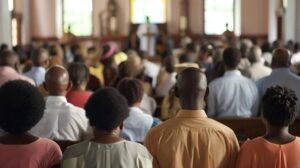
In response to my post, “Loud Music in Worship?”, one question invariably arises: What is worship? The following outline seeks to provide a balanced account of God-centred, holistic Christian worship, integrating theology, liturgy, and lived response.
A. What is worship?
Ralph Martin defines worship as: the dramatic celebration of God in his supreme worth in such a manner that his ‘worthiness’ becomes the norm and inspiration of human living.
Worship is heart-occupation with Christ. Worship is the overflow of the heart that has no request to make. To worship God is to quicken the conscience by the holiness of God; to feed the mind with the truth of God, to purge the imagination by the beauty of God, to open the heart to the love of God, to devote the will to the purpose of God. (William Temple)
Worship is the activity of the new life of the believer in which recognizing the fullness of the Godhead as it is revealed in the person of Jesus Christ and His mighty redemptive acts, he seeks by the power of the Holy Spirit. Biblical worship is holistic as it is centred on the Triune God and it ministers to the whole person. to render to the living God the glory, honor, and submission which are His due. (Robert Rayburn)
Biblical worship is therefore holistic: It is Trinitarian, Christ-centred, and directed to the whole person’ s mind, will, affections, and body.
B. General framework: Worship is trinitarian structure, the salvation–historical content and context and celebratory tone. It places God at the centre and emphasizes the theological underpinning of worship. Anything else that distracts us from focusing on God is idolatry. Worship is the activity not simply to satisfy the worshipper’s needs or to make him feel better or to minister to his aesthetic taste or social well-being, but to express the worthiness of God himself.
C. Theology of Worship
1. Christocentric Focus. Worship is Christocentric in that we worship the Father, in and through the Son, by the Holy Spirit in praise and thanksgiving for the work of redemption.
Christ-centredness safeguards the distinct identity of Christian worship. Without it, Christian worship becomes indistinguishable from other religious or spiritual experiences.
Recapitulation of the Christ-event. In worship we rehearse the gospel story. The work of Christ is made real again in heaven (Revelation 4:1-5:13), in the congregation and in our hearts (Romans 12:1).
In the power of the Holy Spirit the worshipping community reenacts the content of the gospel story. It proclaims and acts out the great themes of the story that interprets and gives meaning to the world and our life in it. In this sense worship is a sacred drama through which we act out the meaning of existence and enter into the cosmic drama of the life, the death and resurrection of Jesus Christ for our salvation.
When the people of God gather for worship, the Church becomes a visible reality. The Church does not merely assemble; it is constituted afresh in worship.
2. Worship as Enactment
a. Worship is acted out in faith so that the believer experiences renewal and joy of his salvation. Enactment of an event implies organization. In particular, worship is historically oriented to the mighty works of God and salvation in Christ. Worship re-creates and thus re-presents the historical event of Christ so that the worshipper is drawn into a personal meeting with God and responds to his grace.
b. Enactment through Recitation
Through the communal recitation of creeds, the singing of hymns and the proclamation of the preached Word, the Church verbally and symbolically rehearses the gospel so that its saving reality is confessed, proclaimed, and embodied by the worshipping community.
3. Rituals – The Eucharist
Everyone has a part to play. No passive spectator. To be sure, there is a place for emotions in the context of the full engagement of the whole person: See, hear, smell and taste.
4. Forms and Signs
Enactment requires forms. These forms are not mere externals but are signs and symbols of spiritual reality. Just as the immaterial God meets humanity in the material form of Jesus Christ, so Christians meet Christ in worship through visible and tangible means. Even the simplest forms function as signs of relationship and presence. The sacraments, as means of grace, visibly and physically re-present the spiritual presence of Christ to the Church.
5. Praise
True worship is that exercise of the human spirit that confronts us with the mystery and marvel of God in whose presence the most appropriate an salutary response is adoring. Praises focus on the character of God and his mighty historical deeds, witness to God’s excellencies and thank God for his beneficence and answering of prayers. They should focus on the character of God and his mighty historical deeds, witness to God’s excellencies and thank God for his beneficence and answering of prayers. We mark times and doctrines seasons, celebrates festivals, and expounds in hymns.
Criteria for worthwhile hymns
a. The hymn will articulate the praise of God the Father in whom his creation lives.
b. It will celebrate God’s activity in history, both as a past deed in Christ’s incarnate, crucified, risen, and ascended, and as a continuing reality in every age including our own.
c. It will register its sensitivity to personal experience of God’s saving and renewing arace in Christ and in the Spirit, leading to an encouragement to God’s people to rise to the full stature in Christ.
d. The language should be readily understandable and aspects of Christian truth that may be applied at the social level are spent in relationships, both personal worldwide, brought under the aegis of the contemporary Aids in discernment of true faith and provides a focal point for the unity of the Church. with precise and balanced instruction.
D. Order of Worship
1. Congregational Preparation
Silence-feeling of awe in the presence of transcendence. Requires inwardness, meditation, preparation and openness.
Rudolf Otto: It is not so much a dumbness in the presence of Deity, as an awaiting of His coming, in expectation of the Spirit and its message.
Greeting – Appropriate to solemnly call the people to worship the great God. A short scripture or opening prayer may be included.
Invocation – call upon God to make Himself present. Recognition that worship needs divine enablement and grace. Claims the promise of Christ (Matt. 18:20).
Acknowledgment of God’s glory – hymn.
Confession – prayer or hymn or Psalm with theme of repentance. Offer of assurance of pardoning grace.
Hymn of thanksgiving.
2. God speaks through his Word.
Reading of Scripture. Appropriate response from congregation.
The Sermon aimed at encouragement and edification of the congregation.
3. The People respond to God
Congregational comments and testimony on how God has ministered.
Offering of music/response.
Offering of money.
Offering of faith – Recitation of confessional statements. Creeds are precise and balanced instructions that aid in discernment of true faith and provide a focal point for the unity of the Church.
Offering of prayer – Petition and Intercession.
4. Greeting of peace to one another
5. Communion
6. Benediction. The service concludes with God’s blessing, sending the people forth to live out what they have enacted in worship.
Earlier post
Van Dyke’s “Joyful Joyful We Adore Thee” is (Religious) Universalistic. A Rejoinder.