Creation as Divine Manifestation. Wahdat al-Wujūd

Creation as Divine Manifestation. Wahdat al-Wujūd. PCG 3/4
Its Central Teachings and a Christian Critique

A. Introduction
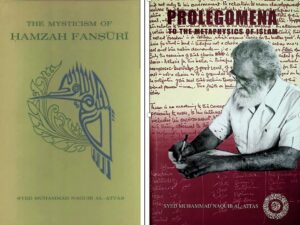
Wahdat al-wujūd (WW), the “Unity of existence,” or “Oneness of Being,” represents one of the most sophisticated and controversial metaphysical frameworks within Islamic Sufism. Primarily attributed to the Andalusian mystic and philosopher Ibn Arabi (d. 1240), this doctrine posits that only God (Allah) possesses true existence (wujūd), and that the phenomenal universe is merely a reflection or manifestation of the Divine Attributes. The philosophy reached Southeast Asia during the 16th and 17th centuries through trade routes connecting the Middle East to Aceh. Hamzah Fansuri (d. 1527) and Shamsuddin al-Sumatrani (d. 1630) adapted Ibn Arabi’s metaphysical framework to reconcile God’s absolute oneness with the visible multiplicity of the world. The premier Malaysian philosopher Naquib al-Attas has defended the orthodoxy of Hamzah Fansuri, distinguishing WW from pantheism while integrating its metaphysics to ground his broader project of establishing the Islamic worldview.

This article examines WW’s core teachings as propounded by Hamzah Fansuri and Naquib al-Attas, exploring their ontological foundations, cosmological framework, and mystical implications, and ending with a Christian theological critique of WW. I shall quote liberally from the works of Naquib al-Attas since many Christians are not familiar with his works. Continue reading “Creation as Divine Manifestation. Wahdat al-Wujūd”
Questions For John Calvin On God’s Providence

Several questions regarding providence are addressed in this video, including God’s justice in electing some for salvation while overlooking others, modern objections to some of God’s attributes in relation to Calvin’s discussion of God’s providence, and the relationship between God’s sovereignty and human responsibility. It ends with a summary of some practical lessons from Calvin’s treatment of God’s providence.

You may view the full video at
John Calvin on God’s Providence. Part 3/3

Next: 6-part series on “Origins of Paul’s Divine Christology” by Dr. Ng Kam Weng

Introducing John Calvin On God’s Providence

John Calvin on God’s Providence. JCGP Part 1/3
Introducing John Calvin On God’s Providence

John Calvin has long been associated with the doctrine of predestination so much so his exposition of the doctrine of God’s providence is often overlooked. Yet the latter is a pervasive theme in many of his writings and in his ministry as a pastor. In this lecture/talk, you will be introduced to a brief history of his exposition of this important doctrine, its development within his magnum opus (Institutes of the Christian Religion), and his treatment of the subject in Chapters 16-18 of Book 1 of the 1559 final edition of the Institutes. As shall be evident, while he was concerned to refute his opponents’ erroneous views of God’s providence, he was even more concerned that their views arose from a defective view of God, as revealed in Scripture.

You may view the full video at
Introducing John Calvin On God’s Providence

The Covenant of Redemption Does Not Entail Social Trinitarianism or Tritheism

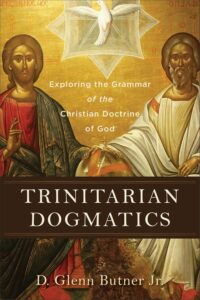
In my previous post, Salvation is Grounded in the Trinitarian Covenant of Redemption, I described how the plan of salvation which began with the “Father’s will” was then accepted for completion by the Son and fulfilled by the operation of the Holy Spirit raises a challenging question.1It should be noted the sequence is logical rather than temporal. “Given that any covenant is premised on a plurality of participants, doesn’t the theology of Covenant of Redemption” lead to the questionable doctrine of social trinitarianism or worse, the heresy of tritheism?” Continue reading “The Covenant of Redemption Does Not Entail Social Trinitarianism or Tritheism”

  • 1
    It should be noted the sequence is logical rather than temporal. ↩︎

Salvation is Grounded in the Trinitarian Covenant of Redemption

Christianity teaches a unique salvation where God takes the initiative in saving humankind from the plight of sin. God “chose us in him [Christ] before the foundation of the world, that we should be holy and blameless before him. In love he predestined us for adoption to himself as sons through Jesus Christ, according to the purpose of his will…which he set forth in Christ as a plan for the fullness of time, to unite all things in Christ” (Ephesians 1: 4-5, 10). Continue reading “Salvation is Grounded in the Trinitarian Covenant of Redemption”