Nominalism, Humanism, and the Rise of Secularism: A Corrective to Syed Muhammad Naquib al-Attas

This post was added as a supplement to the earlier post A Corrective to Syed Muhammad Naquib al-Attas’ Misreading of Aquinas’ Philosophy in his Book, “Islam and Secularism” in Feb. 2026
—–
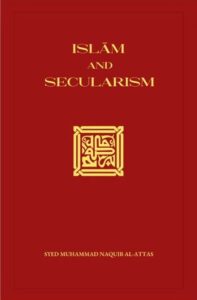
Naquib al-Attas’ claim that Thomas Aquinas’s misguided distinction between existence and essence led to the development of nominalism, which in turn was responsible for the rise of secularism, is not only philosophically dubious but is also an oversimplification of intellectual history. His argument presents a linear, mono cause-and-effect narrative that fails to account for the complex, multi-causal factors that drove secularization in Europe. While nominalism did play a significant role in this process, it was one influence among many. Political changes, economic shifts (urbanization which severed the relationship between the migrant workers and the village church and parson), the Reformation, Renaissance humanism, and the religious wars of the sixteenth century all contributed crucially to the rise of secularism. Continue reading “Nominalism, Humanism, and the Rise of Secularism: A Corrective to Syed Muhammad Naquib al-Attas”

The Arminian Conversion Prayer

Free-Will – A Slave
“And ye will not come to me, that ye might have life.”—John 5:40

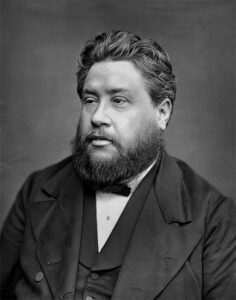
Excerpt from Spurgeon’s Sermon: Free Will—A Slave

IV. This brings us to the fourth point, THAT BY NATURE NO MAN WILL COME TO CHRIST,

It is true of all men in their natural condition that they will not come unto Christ.

The Son of God came, yet men rejected him. “Ye will not come to me that ye might have life.” It would take too much time to mention any more Scripture proofs. We will, however, refer to the great doctrine of the fall. Any one who believes that man’s will is entirely free,1Clarification – Spurgeon has earlier contrasted  “Free will” with “Free Agency”, stating, “Free agency we may believe in, but free-will is simply ridiculous. The will is well known by all to be directed by the understanding, to be moved by motives, to be guided by other parts of the soul, and to be a secondary thing. Philosophy and religion both discard at once the very thought of free-will; and I will go as far as Martin Luther, in that strong assertion of his, where he says, “If any man doth ascribe aught of salvation, even the very least, to the free-will of man [paraphrase – If anyone credits human free will with any part of their salvation, even the smallest amount], he knoweth nothing of grace, and he hath not learnt Jesus Christ aright.” and that he can be saved by it, does not believe the fall.

…Your fallen nature was put out of order; your will, amongst other things, has clean gone astray from God. But I tell you what will be the best proof of that; it is the great fact that you never did meet a Christian in your life who ever said he came to Christ without Christ coming to him. You have heard a great many Arminian sermons, I dare say; but you never heard an Arminian prayer – for the saints in prayer appear as one in word, and deed and mind. An Arminian on his knees would pray desperately like a Calvinist. He cannot pray about free-will: there is no room for it. Fancy him praying, Continue reading “The Arminian Conversion Prayer”

  • 1
    Clarification – Spurgeon has earlier contrasted  “Free will” with “Free Agency”, stating, “Free agency we may believe in, but free-will is simply ridiculous. The will is well known by all to be directed by the understanding, to be moved by motives, to be guided by other parts of the soul, and to be a secondary thing. Philosophy and religion both discard at once the very thought of free-will; and I will go as far as Martin Luther, in that strong assertion of his, where he says, “If any man doth ascribe aught of salvation, even the very least, to the free-will of man [paraphrase – If anyone credits human free will with any part of their salvation, even the smallest amount], he knoweth nothing of grace, and he hath not learnt Jesus Christ aright.”

A Calvinist Critique of Arminian Hermeneutics of Election and Salvation

Debates between Calvinism and Arminianism concerning salvation frequently center not only on doctrinal conclusions but also on differing approaches to biblical interpretation. Both traditions affirm the final authority of Scripture and seek to interpret biblical texts responsibly within their literary and theological contexts. Nevertheless, they often arrive at sharply different conclusions regarding divine election, grace, and human freedom.

This article examines several key passages commonly discussed in the debate and offers a Reformed (Calvinist) critique of Arminian hermeneutical method, particularly where Calvinist interpreters believe theological assumptions influence the reading of the text.

Definitions
Calvinist Monergism: All fallen human beings are spiritually dead due to sin. Salvation begins with God’s sovereign and effectual grace, which regenerates chosen individuals so that they are enabled to respond in faith to God’s offer of salvation. Salvation originates entirely in God’s initiative rather than in the human will. In this framework, regeneration precedes faith.
Arminian Synergism: All fallen human beings have been given God’s prevenient grace, which restores the ability to respond freely to the gospel. This grace is sufficient to enable faith but does not guarantee it. Faith is not caused irresistibly by grace but freely exercised by the individual. Salvation involves cooperation between prevenient grace and human response.

Romans 9:15–16 and the Ground of Salvation
Continue reading “A Calvinist Critique of Arminian Hermeneutics of Election and Salvation”