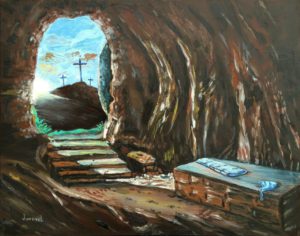
 The Empty Tomb: Inadequate Alternative Explanations. BADR Part 8
Question – Critics have offered other theories to explain the empty tomb of Jesus. Why are these alternative theories not plausible?
1) Swoon or Apparent Death Theory: Jesus did not die.
But the Roman executioners were “professionals” who were thorough in verifying Jesus’ death.
2) Conspiracy & Theft Theory: The disciples stole the body and claimed that He rose from the dead.
But conspiracy is always executed for selfish advantage and the disciples were persecuted and imprisoned for their claims. Conspiracy theory about the resurrection violates all known psychological laws of lying.
3) Hallucination Theory: All of Christ’s post-resurrection appearances were really hallucinations.
But hallucination only visits the prepared mind. The disciples were not psychologically predisposed and did not expect Jesus to rise from the dead. Critics only needed to point to the body of Jesus in his tomb to refute the disciples.
You can view the video at:
The Empty Tomb: Inadequate Alternative Explanations. BADR Part 8
Next video – Harmonizing Alleged Discrepancies Between the Resurrection Accounts of the Four Gospels. BADR 9
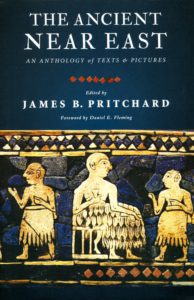
 Many critical scholars in Western universities suggest that the biblical Creation and Flood stories borrowed ideas from Ancient Near Eastern Texts (ANET). For example, the Creation story in Genesis must be influenced by the Babylonian creation story of Enuma Elish since the story in Genesis is briefer and the preserved records of Genesis belong to a later date. However, Kenneth Kitchen rejects this notion. He writes, “The common assumption that the Hebrew account is simply a purged and simplified version of the Babylonian legend (applied also to the Flood stories) is fallacious on methodological grounds. In the Ancient Near East, the rule is that simple accounts or traditions may give rise (by accretion and embellishment) to elaborate legends, but not vice versa. In the Ancient Orient, legends were not simplified or turned into pseudo-history (historicized) as has been assumed for early Genesis.”/1/
 Bart Ehrman’s Challenge to Evangelicals to Renew Studies on NT Introduction
 Question: Matthew cites Isa. 7:14 and says it is fulfilled by the birth of Jesus. However critical scholars argue that in the context of Isaiah 7, this verse is about a child born during the time of Ahaz. How would evangelical scholars like you respond to this critical scholarship?
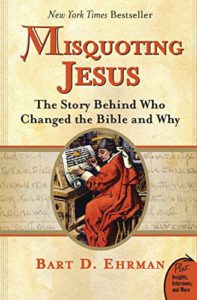 Bart Ehrman’s primary mission in life is undeniable. It is to discredit Christianity and to deconvert Christians from their faith. Ehrman’s attack on Christianity has been effective because he claims to be speaking as an objective historian (which is debatable), in contrast to apologists and theologians defending their faith and because he is speaking as a lapse fundamentalist with insider-knowledge. Ehrman’s attack on Christianity is comprehensive, but I shall only highlight three of his favorite lines of attack on Christianity.