Loud Music in Church Worship?

Someone posed to me a question regarding the dominance of loud music in contemporary worship. Sharing here a very concise response since this is the first time I have put down my thoughts on this issue in words.

First, Christianity should be fun without being frivolous as Christians come together for fellowship and worship.

1) Worship must be governed by what God has commanded in Scripture, not by human preference or popular culture. When music becomes the central focus, it sidelines prayer, preaching and sacraments. There is a risk elevating human creativity and sensuality above God’s ordained means of grace.

2) Word-Centered Worship – Excessive reliance on music can shift attention from what God has revealed in his unchanging Word to fluid emotional experience. Worship becomes more about how we feel (human centredness) than what God has said. A word-sacrament centred worship will be God-centred and Christ-centred even as we rejoice in God’s presence.

3) Reverence vs Performance – Dominance of (loud) music distracts us from the simplicity and reverence that ought to accompany our encounter with the holy God. Performance ‘worship’ undermines corporate and individual participation in worship even as individuals come to worship meetings to 1) nourish their faith by participation in the Lord’s Supper which is a means of grace and a renewal of our covenant with God, and 2) to have our faith nourished by the Word of God.

In short, while music is a good gift from God to enrich our worship, it must remain a secondary element and not the dominant element in worship.

Good and bad theology in hymns and worship songs Continue reading “Loud Music in Church Worship?”
Genesis 1–11: God’s Design for Personhood (Pt. 2/5)

Genesis 1–11: God’s Design for Personhood (Pt. 2/5)

God created humanity “in his image.” The meaning of “the image of God” matters; it is our identity as human beings. Today there is a tendency in OT scholarship to confuse the purpose for being made in God’s image with the meaning of being made in God’s image. This video gets beneath the English translation and concludes that to be made in God’s image is to be like God in some ways—in terms of humanity’s God-like nature of personhood, qualities of love and justice, and abilities to communicate and create. All this is so that humanity could fulfill God’s purpose for them. Persons can think, reason and make decisions; God’s design for personhood is for humanity to think, reason and make decisions in a way not independent of God and his will. Humanity began to deviate from this design when Adam and Eve ate from the tree of the knowledge of good and evil. To appreciate why in modern civilization humanity is on a path to self-destruction we need to return to what happened in the garden of Eden.

You can view the video at


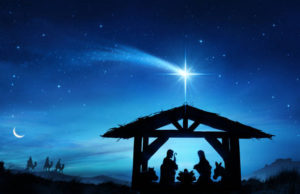
Cosmos to Christmas Cradle: From Pre-existent to Incarnate Christ

I. The eternal backdrop and significance of Christmas

A. Theological Treasures in Christmas Carols
To many, Christmas marks the birth of Jesus Christ in Bethlehem. Yet its deeper significance lies in the mystery that the eternal Son who was pre-existent with the Father from eternity entered human history as a newborn child.1“The term pre-existence refers to the idea of an entity having a heavenly existence before its earthly, historical or eschatological manifestation, sometimes even before the creation of the world.” [DPL, p. 743.] Pre-existence is the logical implication of the more scriptural term σὰρξ ἐγένετο (sarx egeneto), became flesh “incarnated”. This theological truth elevates Christmas beyond a sentimental birthday celebration, transforming it into a cosmic event of unparalleled depth and consequence.

Without the doctrine of Christ’s pre-existence, Christmas risks being reduced to a seasonal myth, akin to pagan narratives of cyclical dying-and-rising gods tied to nature’s rhythms. In contrast, the incarnation is a singular, unrepeatable act: the eternal Word becoming flesh. This truth is richly embedded in the lyrics of traditional Christmas carols, which often carry profound theological insights beneath their melodious tunes.

1) Hark! The Herald Angels Sing
This carol is particularly rich in theology concerning Christ’s divine nature and pre-existence.
a) Christ, by highest heav’n adored; Christ the everlasting Lord! Come, Desire of Nations, come, Fix in us thy humble home.
The phrase “everlasting Lord” anchors the incarnation in eternity. The invocation to “come” presupposes a divine being who already exists and is now entering creation
b) Veiled in flesh the Godhead see; Hail the incarnate Deity! Pleased as man with men to dwell, Jesus, our Immanuel.
This stanza offers one of the clearest affirmations of the incarnation. The “Godhead” voluntarily veils His eternal glory by assuming finite human nature (“flesh”) to dwell among us.

2) O Come, All Ye Faithful
“God of God, Light of Light, Lo! he abhors not the Virgin’s womb; Very God, Begotten, not created.”
These lines echo the Nicene Creed: “God of God, Light of Light” and “Very God, Begotten, not created” are definitive statements of Christ’s eternal, divine nature. The carol resists any notion of Christ as a created being. Instead, it proclaims that Christ who is eternally “begotten” of the Father entered the world through the “Virgin’s womb.”

3) O Come, O Come, Emmanuel
Though primarily about messianic longing, it includes a line revealing a pre-temporal identity:
“O come, Thou Wisdom from on high, Who orderest all things mightily.”
“Emmanuel” means “God with us.” The one who “orders all things” is the divine Logos – pre-existent, sovereign, and active in creation. The carol thus links messianic hope with cosmic authority.

Christmas carols, often sung with simplicity or sentimentality, are in fact theological treasures that encapsulate the profound doctrines of the Christian faith. Continue reading “Cosmos to Christmas Cradle: From Pre-existent to Incarnate Christ”

  • 1
    “The term pre-existence refers to the idea of an entity having a heavenly existence before its earthly, historical or eschatological manifestation, sometimes even before the creation of the world.” [DPL, p. 743.] Pre-existence is the logical implication of the more scriptural term σὰρξ ἐγένετο (sarx egeneto), became flesh “incarnated”.

Genesis 1–11: God’s Design for Humanity. Pt. 1/5

Genesis 1–11: God’s Design for Humanity. Pt. 1/5

Genesis 1–11 is about the beginning not only of the universe, but also of humanity, civilization, nations, and even government. This video is the first in a series of five on God’s design for humanity based on Genesis 1–11. In today’s intellectual climate, even God does not make sense, let alone his design for humanity. Modern civilization has deviated from God’s design for humanity in a way unprecedented in human history since the days of Noah. There are two consequences: humanity seems to be heading toward self-destruction (the problem); God and his design for humanity (the solution) no longer make sense. So modern civilization is such that the only solution to the intractable problem it has created does not make sense! This series of videos seeks to show that God and his design for humanity are indeed the solution to the problem. This first video is to reorientate our thinking so that God and his design for humanity make sense even today. It thus sets the stage for the other four videos, which are about God’s design for personhood, civilization, nationhood, and government.
You can watch the full video at