Monotheism in Ancient Israel

Introduction: One of the presuppositions held by many contemporary critical scholars of the Old Testament is that it is inappropriate to introduce the idea of revealed truths into their academic discipline. Instead, the Old Testament should be studied like any literary text set within the backdrop of Ancient Near Eastern Texts (ANET). Since the Old Testament inescapably shares the cultural and religious mindset of its milieu, it should be analyzed with reference to the dominant thought forms of the Ancient Near East in order to arrive at an accurate understanding of the text. It is natural that these scholars regard the (spiritual) insights found in the Old Testament to be the fruit of the religious genius of the Jewish people developed through their painful experience of history rather than to be truths of divine revelation.

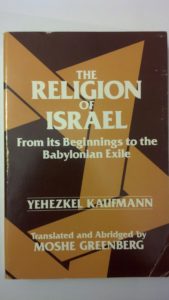
However, Yehezkel Kaufmann (1889-1963), challenged the reigning paradigm of critical scholarship and argued that the ideas found in the ANET are not comparable to the distinctive ideas that flow from the monotheistic religion of ancient Israel. In this regard, a pertinent question to ask believers who have adopted the fashionable methods of critical scholarship today is whether faith for them is founded on the Old Testament, with the distinctive ideas of the Old Testament as its determining factors or whether faith is built on a sophisticated eclectic system which combines refine ideas of the Ancient Near East milieu. [c.f. Norman Snaith,  p. 187] Continue reading “Monotheism in Ancient Israel”

Historical Origin of Divine Christology. Part 1 – Apostolic Christology vs Mythological Christology

Mythological Christology
Some critics of Christianity assert that the doctrine of the deity of Christ was imposed on the church by Emperor Constantine during the Council of Nicaea (325 AD). Presumably, the early church in the first century began with a lower view of Jesus as an itinerant teacher and apocalyptic prophet of God. However, Jesus was gradually elevated to a higher status as Christianity spread through the Roman Empire. Christianity was loosened from its monotheistic Jewish roots when the new Hellenistic Christian communities surpassed the early Judaistic Christian community. A higher Christology evolved with adoption of elements of pagan religions. The result is the deification of Jesus Christ.

This theory has its roots in the “history of religions school” (Religionsgeschichtliche Schule) in Germany in the 19th century. The school extended its influence into the USA through the seminal works of Wilhelm Bousset, Kyrios Christos (1913) and Walter Bauer, Orthodoxy and Heresy in Earliest Christianity (1934). High profile scholars like Bart Ehrman are essentially theorizing from the framework of Bauer’s theory even as they speculate further that the deification of Jesus Christ was accelerated, purportedly under the influence of Jewish angelology. Continue reading “Historical Origin of Divine Christology. Part 1 – Apostolic Christology vs Mythological Christology”

Bart Ehrman Answered by Scholars

Dr. Bart Ehrman is raising significant questions about the reliability of the Bible. In an engaging way, he is questioning the credibility of Christianity. His arguments are not new, which he readily admits. Numerous Biblical scholars profoundly disagree with his findings. This site provides responses to Dr. Ehrman’s provocative conclusions.

Ehrman Project: Question. Engage. Respond

Comments on Peter Williams vs Bart Ehrman Debate on the Historical Reliability of the Gospels

Two comments from readers:
1) I watched the debate between Peter Williams and Bart Erhman as well as Erhman’s other presentations over Youtube. Williams arguments are persuasive but he was uncomfortably defensive in contending with a combative and skilled debater like Erhman. Erhman position is that one can accept the gospels and the New Testament writings from the theological point of view and I suppose he meant by faith but not from the rigorous analysis of historians. Would appreciate your thoughts on this.

My Response:
Bart Ehrman attributes his loss of faith to his study of early manuscripts of the gospels. He shared that he grew up as a fundamentalist (note his journey from Moody Bible Institute to Wheaton College and then to Princeton seminary) who upheld a rigid understand of inerrancy. Following his rigid understanding of inerrancy, Ehrman insists that if God inspired the writers he wouldn’t have allowed scribal errors or textual variants. As such,  Ehrman abandoned his faith when he was exposed to manuscript variants during his seminary studies. The basis of Ehrman’s faith couldn’t have been more flimsy or misplaced. It is certainly indefensible. Ehrman’s view of inerrancy is uncommon as it would be hard to find a conservative scholar working with biblical manuscripts and Christian origins who actually who shares Ehrman’s rigid view of inerrancy. However, unlike Ehrman, conservative scholars do not seem to be troubled by the existence of manuscript variants. Perhaps, Ehrman has other hidden reasons that led him to abandon his faith. Indeed, Ehrman continues to rely on his distorted view of inerrancy as a fig leaf to camouflage the real reason for his loss of faith which is probably a deeper problem of the heart. That he continues to stigmatize conservatives with his earlier distorted view of inerrancy suggests that it serves as a convenient strawman for him in his writings. Continue reading “Comments on Peter Williams vs Bart Ehrman Debate on the Historical Reliability of the Gospels”

In Defence of Prophetic Authorship and Unity of the Book of Isaiah. Part 2/2

I. Summary of Defence of the Isaianic authorship by Gleason Archer
[Gleason Archer, the legendary professor of Old Testament at Trinity Evangelical Divinity School, Chicago (he modestly told me in 1984 that he only knew 28 languages although rumours were that he knew many more), wrote the following discussion as a supplement to his rebuttal of the critical arguments for source division of Isaiah 1-39 and Isaiah 40-66 based on “Alleged Differences in Theme and Subject Matter,” and “Alleged Differences in Language and Style.”]

Additional Proofs of the Genuineness of Isaiah 40–66

1. First of all it should be noted that Jesus ben Sirach (48:22–25) clearly assumes that Isaiah wrote chapters 40–66 of the book of Isaiah. E. J. Young notes, “The tradition of Isaianic authorship appears as early as Ecclesiasticus.

2. The New Testament writers clearly regard the author of Isaiah I and Isaiah II to be one and the same. Many of the New Testament quotations could be interpreted as referring to the book merely according to its traditional title, but there are other references which clearly imply the personality of the historic Isaiah himself. Continue reading “In Defence of Prophetic Authorship and Unity of the Book of Isaiah. Part 2/2”

In Defence of Prophetic Authorship and Unity of the Book of Isaiah Part 1/2

The Authorship of Isaiah: A Straight-Forward Biblical Defence
by Dr. Leong Tien Fock, (PhD in Semitic Languages and Literatures)

Assessment of current scholarship, both critical and conservative

According to An Introduction to the Old Testament, an “evangelical” book that is slightly “liberal,” by Tremper Longman III and Raymond B. Dillard (2006: 309-10):

In many respects, contemporary critical opinion about Isaiah has recovered from the excesses that characterized scholarship in the late eighteenth and early nineteenth centuries. The consensus among critical scholars has moved in the direction of acknowledging much of what was dear to conservatives: that Isaiah is not the result of a haphazard accident and internally contradictory, but rather the book as a whole shows a unity of themes and motifs. The tenor of much of the debate has shifted from focus on dissecting the text to recover sources and settings to efforts to expound the coherence and unity of the text as it exists. Arguments from conservatives for unity of authorship based on common themes and vocabulary have now in large part been taken over and pressed into service as arguments for a redactional unity in the book [italics added].

To be sure, critical and conservative opinion remain divided on the issue of authorship. Although there is a growing consensus about the overall unity of Isaiah, for critical scholarship it is a unity forged through a history of redaction rather than a unity that derives from a single individual author. Continue reading “In Defence of Prophetic Authorship and Unity of the Book of Isaiah Part 1/2”

Evaluating Theological Interpretation of Scripture

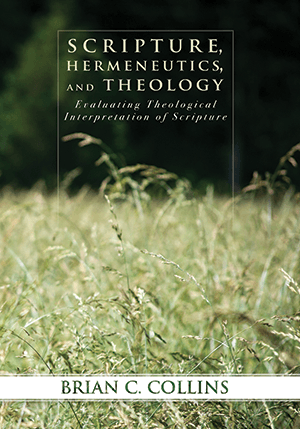
An interview with Brian Collins, author of Scripture, Hermeneutics, and Theology: Evaluating Theological Interpretation of Scripture. Greenville, SC: Exegesis & Theology, 2012. You may download a free PDF of the book HERE (a whopping 448MB). Highlights from the interview. LINK Modern Historical Critical Methods Renders the Bible Irrelevant Collins cites Don Carson, “Historical critical methods … Continue reading “Evaluating Theological Interpretation of Scripture”

An interview with Brian Collins, author of Scripture, Hermeneutics, and Theology: Evaluating Theological Interpretation of Scripture. Greenville, SC: Exegesis & Theology, 2012.

You may download a free PDF of the book HERE (a whopping 448MB).

Highlights from the interview. LINK

Modern Historical Critical Methods Renders the Bible Irrelevant
Collins cites Don Carson, “Historical critical methods that are “anti-supernatural” and “determined by post-Enlightenment assumptions about the nature of history” do render the Bible irrelevant. Notably, that is what those methods were designed to do. In short, modern historical criticism has failed in its promise of objective interpretation while also rendering the Bible irrelevant. Theological interpretation of Scripture must integrate exegesis and theology to regain the relevance of Scripture today.

To regain an interpretative method that respects the authority of Scripture and its relevance, Collin begins with A.N.S Lane’s historical survey of the major views on Scripture and tradition in church history. Continue reading “Evaluating Theological Interpretation of Scripture”

Christian Scholarship & Deliverance from Chronological Snobbery

One of the criticisms that ‘progressive’ Christians level at orthodox Christians is that they are anti-intellectual since they oppose the idea of applying insights drawn from critical theory and social sciences to interpret the Bible. This criticism is surely unfounded. For orthodox Christians, “All truth is God’s truth,” and the scholar of the Book should … Continue reading “Christian Scholarship & Deliverance from Chronological Snobbery”

One of the criticisms that ‘progressive’ Christians level at orthodox Christians is that they are anti-intellectual since they oppose the idea of applying insights drawn from critical theory and social sciences to interpret the Bible. This criticism is surely unfounded. For orthodox Christians, “All truth is God’s truth,” and the scholar of the Book should also be a scholar of many other books. As such, they would welcome any interdisciplinary exercise that seeks to enrich our understanding of Bible on its own terms. However,  orthodox Christians who engage in interdisciplinary studies should be clear about their presuppositions and priorities so as to avoid compromising their faith inadvertently.

First, the Bible as the infallible word of God should function as the background controlling belief in the integration of faith and contemporary knowledge like critical theory and social sciences. Continue reading “Christian Scholarship & Deliverance from Chronological Snobbery”

What Grass? What Cow? -The Biblical Scholar, Theologian and Philosopher

Three professors – a biblical scholar, a systematic theologian and a philosopher were in the same coach as the train was passing by a meadow. Biblical scholar: Look at the great variety of grass and plants! – Just penta-species to start with: Andropogon Gerardii, Bouteloua Gracilis,Erechtites hieracifolia, Vernonia Cinerea, Helictotrichon Pratense, etc. You must carefully … Continue reading “What Grass? What Cow? -The Biblical Scholar, Theologian and Philosopher”

Three professors – a biblical scholar, a systematic theologian and a philosopher were in the same coach as the train was passing by a meadow.

Biblical scholar: Look at the great variety of grass and plants! – Just penta-species to start with: Andropogon Gerardii, Bouteloua Gracilis,Erechtites hieracifolia, Vernonia Cinerea, Helictotrichon Pratense, etc. You must carefully identify the multiple grass sources. What milk you get is what grass the cow eats.

Systematic theologian: Hey! Are you sure this is milk? Is it kosher-halal?

Philosopher: I don’t know what cow, grass and milk you guys are talking about.

NKW: I don’t know what grass I smoked to come up with this lame stuff.

Scholarship without Wisdom and Spiritual Discernment

Where is the Life we have lost in living? Where is the wisdom we have lost in knowledge? Where is the knowledge we have lost in information? Academic Directive #27 Evangelical scholars seeking acceptance by the secular academia must demonstrate that their scholarship is “objective’ and “up to date.” This would require them to submit … Continue reading “Scholarship without Wisdom and Spiritual Discernment”

Where is the Life we have lost in living?
Where is the wisdom we have lost in knowledge?
Where is the knowledge we have lost in information?

Academic Directive #27

Evangelical scholars seeking acceptance by the secular academia must demonstrate that their scholarship is “objective’ and “up to date.” This would require them to submit journal articles that are replete with copious footnotes which refer to a wide spectrum of ancient texts and archaeological sources, and comply with the critical presuppositions and methodology that are prevailing within the secular academia.

Credit may be given to evangelical biblical scholars who have taken up the challenge to match the terms and conditions set by the secular academia. They are unlike their theological cousins belonging to the “Old School of Medievalists and Puritans” who remain recalcitrant in purveying ancient superstitions as they continue to spout outdated scholarship learned from dusty tomes of ancient writers whom they reverently referred to the ‘Church Fathers’ or the ‘Scholastics’. It is irksome as these academic wannabees fail to separate their confessional faith and rigid tradition from objective, historical scholarship. May His Infernal Majesty reserve the hottest fire for these theological fools and fanatics for their academic fraudulence! Continue reading “Scholarship without Wisdom and Spiritual Discernment”