Universalism = Christ Died for the sins of all people without exception
I. John Owen, in The Death of Death in the Death of Christ (1648), offers a classic defence of definite atonement—the doctrine that Christ’s death was both definite in purpose and effective in accomplishment. Christ died not for humanity in general, but specifically for the elect whom the Father had given him; and his death actually secured their redemption.
Owen advances two powerful arguments in defence of this position.
The Double Payment Argument
Sin is a debt owed to God’s justice. Christ’s death has fully paid the penalty for sin. If Christ died for all people universally, then all must be saved, because a just creditor does not demand payment for the same debt twice. Exacting double punishment—first on Christ, then on the condemned sinner—is unjust. Yet Scripture clearly teaches that not everyone is saved. Therefore, Christ did not die for all people universally, and his atoning work was intended only for the elect – This is an argument to the contrary. (John Owen, The Works of John Owen, Goold ed. [Banner of Truth reprint, 1989], vol. 10, p. 173. All subsequent citations refer to this edition.)
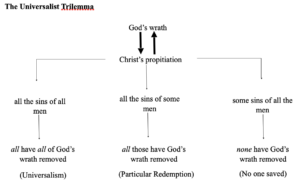
The Universalist Dilemma
Owen then challenges the universalist claim that Christ died for every individual human being. He argues that this position entails one of three possibilities: Christ bore (1) all the sins of all people, (2) some of the sins of all people, or (3) all the sins of some people. Option (1) entails universal salvation, which contradicts Scripture. Option (2) means every person still stands condemned for their remaining sins. Only option (3) is logically coherent and scripturally grounded. Owen concludes that Christ died for all the sins of the elect alone. Continue reading “John Owen’s Double Payment Argument for Definite Atonement and the Arminian Universalist Dilemma”







 Question: How did the apostles and early Christians come to believe in the deity of Christ?